

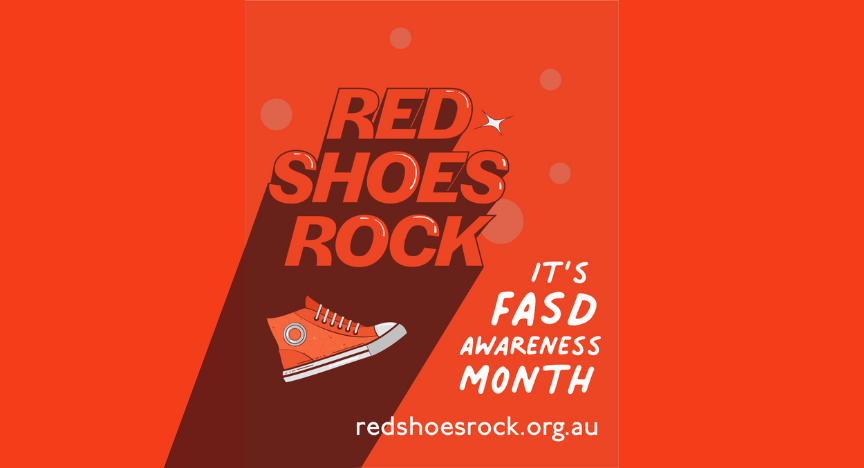
 This September, Central West HHS is wearing red shoes for Fetal Alcohol Spectrum Disorder (FASD) Awareness Month.
Summary
Central West health professionals are reminding women and families that the safest choice during pregnancy is not to drink alcohol.
Central West health professionals are reminding women and families that the safest choice during pregnancy is not to drink alcohol.
Central West Hospital and Health Service Clinical Midwifery Consultant Tina Meynell said exposure to alcohol before birth placed babies at risk of lifelong harm through Foetal Alcohol Spectrum Disorder (FASD).
“September is FASD Awareness Month, with 9 September to be observed as International FASD Awareness Day,’’ Ms Meynell said.
“So, it’s timely for pregnant women and women planning a pregnancy to start considering their alcohol intake.
“We are working to raise awareness of this in conjunction with the Red Shoes Rock nationwide initiative which encourages communities to wear red shoes or socks during FASD Awareness Month to start conversations about FASD and the importance of alcohol-free pregnancies.’’
Ms Meynell said FASD was a diagnostic term used to describe a range of physical, behavioural, developmental and learning difficulties that can result from prenatal alcohol exposure.
“Australian Institute of Health and Welfare data indicates that about 5.6 per cent of Queensland women report consuming alcohol during the first 20 weeks of pregnancy, and this rate is often higher in rural areas,’’ she said.
“Current national evidence suggests FASD affects nearly 4 per cent of the population, making it one of the most common neurodevelopmental disabilities.
“The condition is permanent and can affect a person's ability to learn, communicate, regulate emotions and participate fully in education, employment and community life.
“Alcohol passes readily through the placenta and into the developing baby's bloodstream.
“Because a developing baby's liver is immature, alcohol cannot be processed effectively, and alcohol exposure may interfere with normal brain and organ development.
“Many people are unaware that FASD is a lifelong condition with no cure or specific medical treatment.
“Prenatal alcohol exposure can result in permanent brain injury and lifelong difficulties with learning, memory, attention, emotional regulation, communication, behaviour and daily functioning.
“While supportive interventions can improve outcomes, the underlying brain injury cannot be reversed.
"FASD is 100 per cent preventable, yet it remains one of the leading causes of preventable developmental disability.’’
Ms Meynell said the safest choice during pregnancy was not to drink alcohol at all.
“Women planning a pregnancy should stop drinking alcohol prior to conception. Women who discover they are pregnant should stop drinking alcohol as soon as possible,’’ she said.
“Women who are breastfeeding should also be aware that alcohol passes into breast milk.
“Avoiding alcohol while breastfeeding is the safest option for babies, particularly newborns and young infants.’’
Ms Meynell said the impacts of FASD extended beyond the individual and could affect families, carers, schools and communities.
Children and young people living with FASD often require additional support throughout their lives to help them achieve their full potential.
“Partners, family members and friends can play an important role by supporting alcohol-free pregnancies and helping create environments where pregnant women feel comfortable choosing not to drink,’’ Ms Meynell said.
“Community understanding and support also are essential in reducing stigma and promoting healthy outcomes for mothers and babies.
“With awareness and prevention efforts continuing across the country, the message remains clear: if you are pregnant, planning a pregnancy, or could become pregnant, the safest option is to avoid alcohol completely.
“By making informed choices, families can help give every child the healthiest possible start in life.’’
For more information about the Red Shoes Rock initiative visit:
https://redshoesrock.org.au/