

Summary
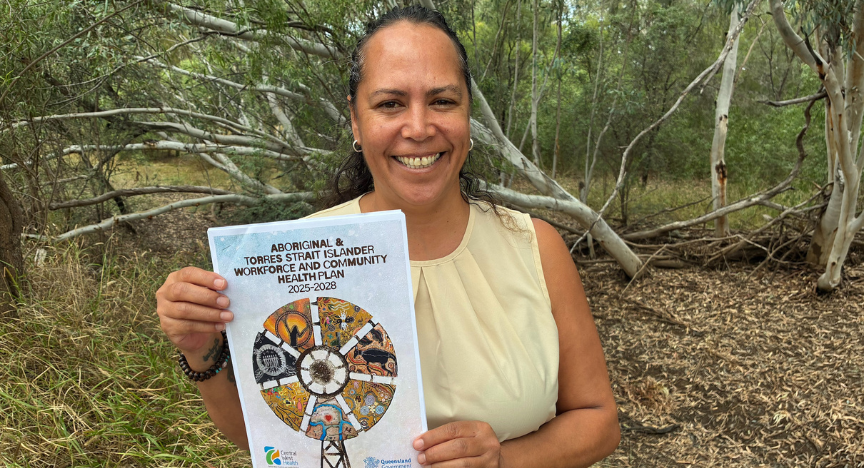
A new Aboriginal and Torres Strait Islander Workforce and Community Health Plan 2025-2028 has been launched for the Central West Hospital and Health Service region.
The plan has been finalised in time to coincide with this year’s NAIDOC Week from 5-12 July, celebrating the theme of 50 Years of Deadly.
A new Aboriginal and Torres Strait Islander Workforce and Community Health Plan 2025-2028 has been launched for the Central West Hospital and Health Service region.
The plan has been finalised in time to coincide with this year’s NAIDOC Week from 5-12 July, celebrating the theme of 50 Years of Deadly.
Central West Health Executive Director Aboriginal and Torres Strait Islander Health Tess Symes said the new plan included additional critical priorities and was an extension of the health service’s ongoing Health Equity Strategy which was launched in 2022.
Ms Symes said Central West Health had been working with Queensland Health’s First Nations Health Office since December 2024 to develop the Workforce and Community Health Plan.
Ongoing community engagement and consultation was undertaken with local stakeholders throughout, she said.
“As a result, we’ve developed three top priorities for the new plan that were identified by our Central West Aboriginal and Torres Strait Islander communities,’’ she said.
The three key priorities are:
1. Strengthen the Aboriginal and Torres Strait Islander Workforce
2. Eliminate Racism and build culturally safe and responsive healthcare services
3. Increase access to safe, quality, integrated & sustainable healthcare services.
Ms Symes said health equity was a collective movement powered by Aboriginal and Torres Strait Islander leadership.
“This new Workforce and Community Health Plan commits to a new way of working – one where truth-telling, community authority, and shared decision-making guide meaningful change across the health system,’’ she said.
“Health equity is a movement grounded in the voices and resilience of Aboriginal and Torres Strait Islander peoples.
“Through this plan, we aim to build a health system shaped by community leadership, truth-telling, and decisions made together, ensuring care that is fair, culturally strong, and transformative.’’
Ms Symes said the key actions of the new plan would be implanted over the next two years.
“There is Central West Health executive sponsorship across the organisation to support driving meaningful change from the top down, as well as ongoing engagement with Aboriginal and Torres Strait Islander communities who have helped codesign this plan to ensure we are meeting targets and expectations,’’ she said.
“This strategy can only succeed if we harness the expertise and wisdom of our local community through ongoing meaningful engagement and consultation.
“Closing the Gap is not something that can be done by the public health system alone because the reasons for poor life-expectancy are complex.
“Community backing is vital to achieving better health outcomes.
“This is why we worked and consulted closely with local community organisations such as the Central West Aboriginal Corporation and Longreach Aboriginal and Torres Strait Islander Corporation.’’
Ms Symes said the health service is strongly committed to improving services for Aboriginal and Torres Strait Islander residents and to delivering them in culturally appropriate ways.
“Our Workforce and Community Health Plan will build on the work already done over the past couple of years to improve representation of Aboriginal and Torres Strait Islander people within our workforce,’’ she said.
“About 8 per cent of our residents in the Central West, identify as Aboriginal or Torres Strait Islanders.
“Currently, Aboriginal and Torres Strait Islander representation throughout our workforce is about 5.69 per cent and we are aiming to achieve 7 per cent and more.
“Our new workforce plan will provide a blueprint to help us work towards our target.’’
Ms Symes said the locally developed artwork illustrating the new Workforce and Community Health Plan carried the stories, voices and spirit of the seven shires across Central West.
“By gifting their artwork, community members offer a powerful gesture of commitment to the plan and to walking alongside Central West Health through truth telling, co-design and collective healing,’’ she said.